 Caesar® overview
 From Justinian® to Caesar®
 Law, Justice & Compliance
 Government & Public Administration
 Banking & Financial Services
 Security overview
 On-premise
 Sovereign Cloud
 The State of Sovereign AI
 The Sovereign AI Procurement Guide
 Sovereign AI for Justice
 Sovereign Intelligence With Frontier Models
 The Law That Follows Your Data
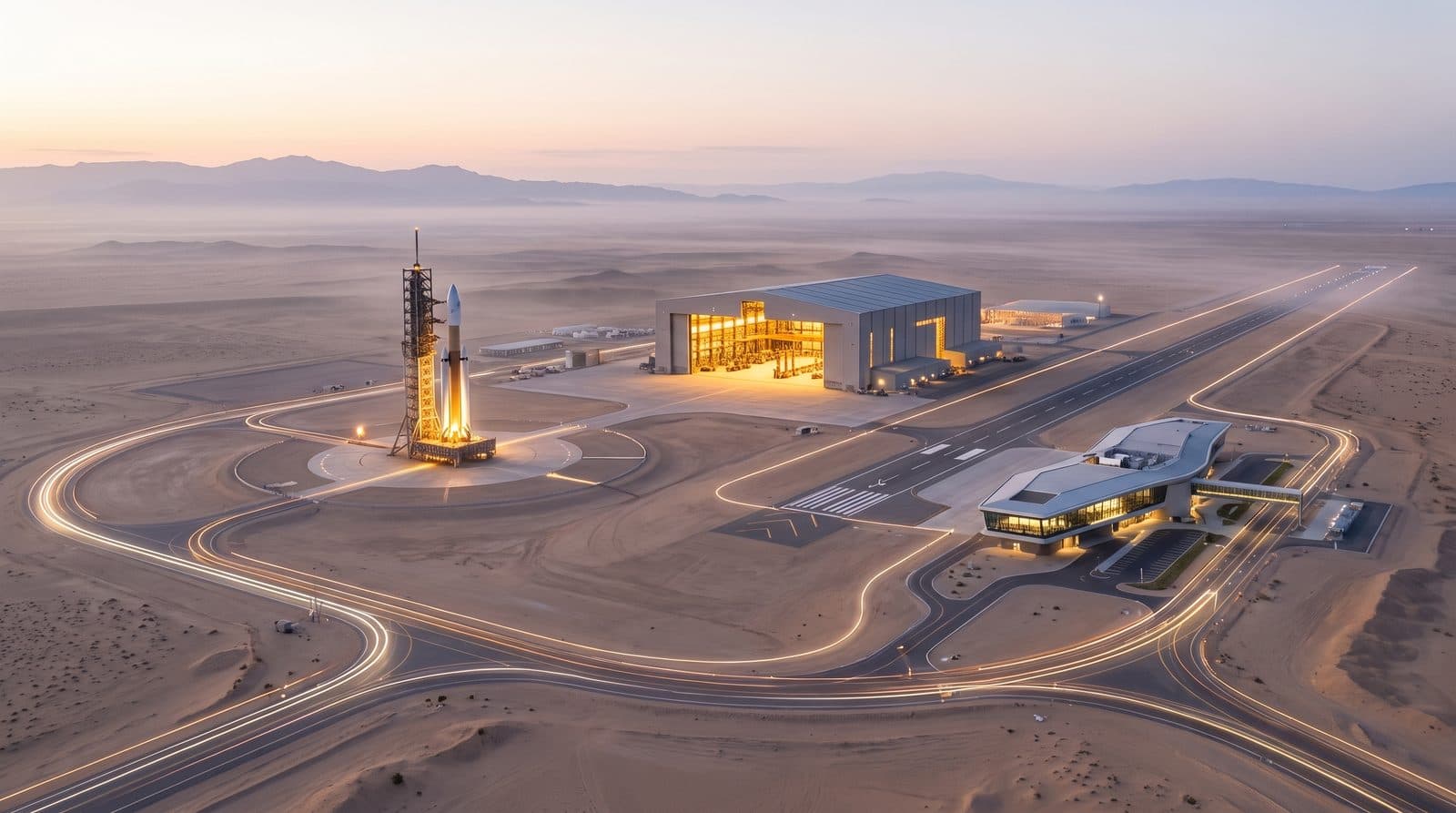
Sovereign AI for Aerospace · Powered by Caesar®
Caesar® helps aerospace teams prepare technical reviews with the evidence in view. Map selected requirements to configuration and verification records, identify mismatches and missing material, and return the findings to qualified reviewers.
No defined use case needed.
You decide what reaches a frontier model.
A requirement can cross suppliers, configurations and review cycles. Organize that record around the verification evidence and configuration baseline the specialist actually needs to examine.
For aerospace manufacturers, space organizations, operators and technical authorities.
What you could explore with HAQQ
Prepare requirement reviews
Map selected requirements to the design documents, test reports and verification records on file.
Trace documented changes
Connect each engineering change to its recorded rationale, affected documents and approvals.
Assemble program knowledge
Retrieve mission archives, review reports and earlier findings for authorized teams.
The work, document by document
- Requirements specification
- Verification records
- Configuration baseline
Map requirements to evidence
A source-linked evidence map with mismatches and missing records, for the qualified reviewer who determines compliance.
- Tender responses
- Statement of work
- Evaluation criteria
Compare two tender responses
A side-by-side list of differences and gaps against the criteria, for the evaluation board to assess.
- Work instructions
- Process specifications
- Nonconformance reports
Answer from production line documents
A sourced answer to a shop-floor question, showing the document and page each point comes from.
- Engineering change notice
- Test reports
- Certification plan
Draft a technical document
A first draft with each statement tied to its source record, for the responsible engineer to correct.
- Mission archives
- Review reports
- Lessons learned
Brief a new mission team
A synthesis of earlier findings with acronyms expanded and the relevant papers listed for the team.
Illustrative possibilities, not live deployments. Sources, integrations and review steps are agreed with your team before any work begins.
Talk to HAQQ →In the field
Follow aerospace teams bringing AI inside their own walls.
Space agencies and aircraft makers hold export-controlled designs and decades of mission records. Several now run language models on their own premises or have chosen a cloud for its legal protections, though the public record is still thin outside Europe and the United States.
An intergovernmental space agency
Is developing an assistant built on a large language model for knowledge management across the agency. It is deployed on the agency’s own premises, with all data held on infrastructure that it controls.
Public source↗An aerospace and defense company
Introduced an internal generative AI tool to its U.S.-based workforce, for post-mission analytics, software code and answers from production line documentation. The company built the platform itself and holds the data on premises.
Public source↗An aircraft maker
Announced a multi-year agreement to host sensitive industrial and defense applications with a French cloud provider, in support of AI tools built with a domestic supplier’s models. Its legal criteria included protection against extraterritorial laws.
Public source↗~70critical applications migrating by end 2028
A national aerospace research center
A master’s thesis project at one of its institutes built a retrieval assistant over two internal knowledge bases that respects each user’s access rights. It runs fully on premises with locally hosted language models.
Public source↗A national space agency
Developed a vision-language model, at research stage, for automatic analysis of its own documents, including dialogue about diagrams. It trained the local model on the agency’s own supercomputer.
Public source↗
Independent examples from the public record, each linked to its source. None of these institutions is a HAQQ customer and HAQQ took no part in their work. They show where the sector is already going.
The rules behind it
United States, export of technical data
ITAR, 22 CFR § 120.54
Unclassified technical data may be sent or stored outside the controls only if it is secured with end-to-end encryption and no third party is given the means of decryption.
Official text↗European Union, applies since 22 February 2026
Part-IS, Regulation (EU) 2023/203
Aviation organizations and authorities must manage information security risks to the systems and data used for civil aviation, and detect and respond to incidents.
Official text↗European Union, Article 108
AI Act, Regulation (EU) 2024/1689
Aviation rules that cover AI systems which are safety components must take the Act’s requirements for high-risk systems into account.
Official text↗The architecture
Own every layer of your Sovereign AI.
Caesar® is the whole architecture. It wraps every layer of the chain in sovereignty, from the energy and hardware it runs on to your data, its intelligence and the applications your people use.
Illustrative example
“Prepare an evidence map for these requirements using the approved configuration and review documents.”
Illustrative example, not a live system response. The result depends on the connected sources and agreed configuration.
For civil aviation authorities, space agencies, satellite and launch operators and aerospace manufacturers.
This requestAsked in the HAQQ web workspace. Only the licensing team can open this mission file.
SovereignYour people work in HAQQ’s apps or your own, under your access rules.
Statutes, regulations, program history and guidance, structured for the engine.
This requestSelected requirements, approved configuration documents and verification and review records.
SovereignYou decide what reaches a frontier model.
Checks, reasons and governs every request.
Model examples. Enabled integrations and API credential options are defined for your deployment.
This requestCaesar® resolves the context, selects the tools and applies the permitted model policy before generation begins. Routed to an open-weight model, self-hosted.
SovereignCaesar® routes each task to the models you approve, and you can bring your own API key.
Where data and compute sit.
This requestOn premises.
SovereignCaesar® runs in Sovereign Cloud or on your own infrastructure.
The power behind every deployment.
SovereignYour deployment runs on the power of the site you choose.
What this example would deliver
- A source-linked evidence map
- Version or configuration mismatches for review
- Missing records and open questions
Where it runs
Deploy Caesar® where your jurisdiction requires.
In Sovereign Cloud or on your own infrastructure.
Deployment
Choose where your Sovereign AI runs.
Sovereignty means deciding where information is stored and processed, who can use it and whether a request may reach an outside model. Choose the environment for Caesar® and set those rules before the work begins.

HAQQ manages the hosting environment. Agree on the region, data handling and permitted models as part of the deployment.
- Upfront
- No hardware or setup to fund
- Best for
- The fastest start

Run Caesar® on your own infrastructure. Use locally hosted models for work that must stay inside the boundary, with external calls enabled only where permitted.
- Upfront
- Hardware you buy and own
- Best for
- Full control of data and compute
API and MCP · Early access
Connect through the APIAn API lets your software send a task to Caesar® and receive the result. Your developers can put research, document comparison or drafting inside the application your team uses.
Hosting and model access are separate choices. A locally hosted engine can use local models, permitted external models, or a combination agreed for the deployment.
Earn your regulators’ trust with security built in.
Caesar® is built to the security and AI-governance standards regulators expect, and every call is logged for audit.
Understand the engine behind every industry.


















Get answers on deploying Caesar® in your institution.
Who is Caesar® for?
Governments and enterprises in sovereign industries: ministries, regulators, banks, public authorities and enterprises, across 25 industries.
Do we need a defined AI use case to start?
No. We work through it with your team, then the architecture, infrastructure, security review and deployment path your environment requires.
Can Caesar® work with the data room or document store we already run?
Yes. Caesar® connects to document stores, databases and enterprise software through their available interfaces, and you define what each connection can read or change.
Can we start in Sovereign Cloud and move on premise later?
Yes. A deployment can start with one task in Sovereign Cloud and move to Hybrid or On-premise as your rules and volumes require. Your knowledge map, connections and workflow rules stay in the engine.
Do we have to buy hardware?
It depends on the set-up. Sovereign Cloud: no hardware or setup to fund. Hybrid: hardware for what stays on site. On-premise: hardware you buy and own.
Who stays responsible for decisions?
Your people. Caesar® prepares the work; your team reviews it and makes the call. You define who reviews, who approves and what may proceed after approval.
Who runs Caesar® day to day: our team or HAQQ?
Your team, HAQQ, or both. Your institution agrees internal ownership and escalation; HAQQ agrees support, monitoring and maintenance responsibilities, written for each deployment.
How long does a deployment take?
It depends on the set-up and on your approvals. Sovereign Cloud is the fastest start, with no hardware to fund; an on-premise deployment follows your hardware lead times. We start with one task and a reviewer who knows the work, then expand.
Does Caesar® know our country’s laws and regulations?
Caesar®’s data layer structures laws, regulations and your own documents for the engine, and it applies the right language, jurisdiction or domain framework to each request. You can also connect the reference content you maintain, such as your own circulars.
Continue from here.

Bring the review that needs a stronger evidence trail.
We’ll scope the documents, relationships and approval boundaries for the first aerospace workflow.
Talk to HAQQBring the problem and we’ll shape the use case with you.
You don’t need a defined AI use case to start. We work through it with your team, then the architecture, infrastructure, security review and deployment path your environment requires.
Prefer email? Write to our team